HomeInsightsFlatbed Laser Cutting Service or 5-Axis? How to Tell Which Your Part Needs
Flatbed Laser Cutting Service or 5-Axis? How to Tell Which Your Part Needs
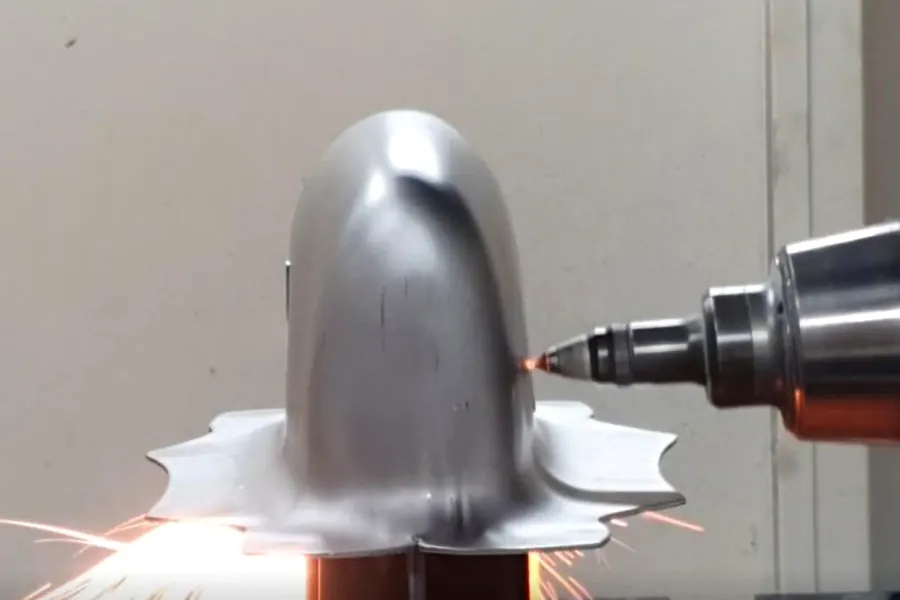
If your part starts life as flat sheet or plate, it needs a flatbed laser cutting service. If it has already been pressed, spun, extruded or bent and still needs holes, slots or a trim, it needs 5-axis laser cutting, which cuts the part in three dimensions after it has been formed.
Most buyers know which one they need straight away. The grey area is the part that is cut flat, folded, and then needs a feature added afterwards. This guide explains how each process works, what each can handle, and when a part uses both.
What does a flatbed laser cutting service do?
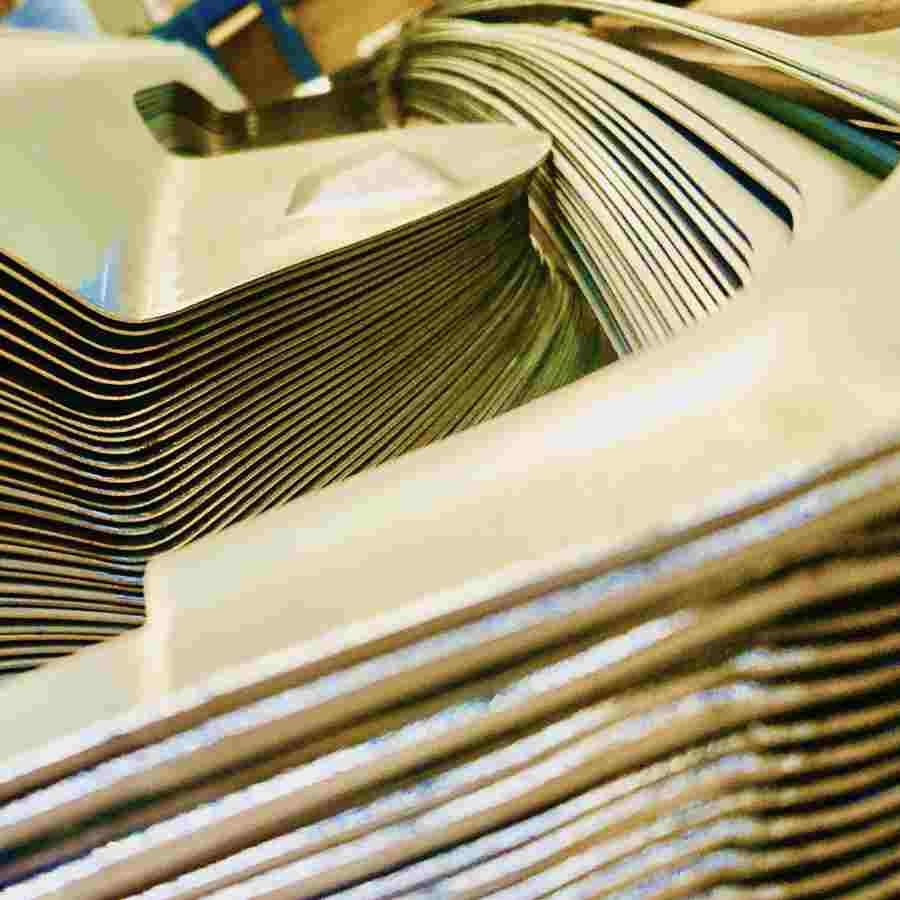
A flatbed laser cuts profiles from flat sheet or plate. The sheet sits on the bed, the cutting head moves across it, and every part on the nest is cut in one run. It is the workhorse of subcontract metalwork, used for brackets, base plates, enclosure panels, gussets and the flat blanks that later get folded.
At GF Laser our flatbed laser cutting runs on Trumpf machines, three shifts a day, five days a week. Parts are nested to minimise material and held so they cannot tip during the cut, which keeps quality consistent from the first part to the last.
What sizes and thicknesses can a flatbed laser cut?
Our largest flatbed has a 4000 x 2000mm bed. Maximum thickness depends on the material:
- Mild steel up to 20mm
- Stainless steel up to 12mm
- Aluminium up to 12mm
- Galvanised and Zintec up to 5mm
- Brass, bronze and copper up to 3mm
Minimum thickness is 0.5mm. Standard tolerance is +/- 0.25mm, with +/- 0.1mm available after prior technical approval.
When does a part need 5-axis laser cutting instead?
A flatbed can only cut a flat surface. Once a part has a curve, a flange or a draw, the cutting head cannot reach the right angle. That is where 5-axis laser cutting comes in. The head tilts and rotates, so it can trim and pierce pressings, spinnings, extrusions and formed tube on the curve.
Our 5-axis machines handle formed components up to 4000 x 1500mm, cutting mild steel up to 10mm, stainless steel and aluminium up to 8mm, copper and brass up to 3mm, and titanium up to 1mm. We design the holding fixtures ourselves and build them in our own welding cell, so the part sits in exactly the same place every time.
The main reason to choose 5-axis is tooling. A press tool to pierce or trim a formed panel takes weeks or months to make and costs a lot up front. For prototypes, modifications and low or ongoing production volumes, a 5-axis laser does the same job with no hard tooling to pay for.
Can one part use both processes?
Yes, and many of the best results come from combining them. A typical route looks like this:
1. The flat blank is cut on the flatbed laser.
2. It is folded on our sheet metal bending press brakes.
3. Features that would distort during folding, such as holes close to a bend line, are added afterwards on the 5-axis machine.
Cutting those features after forming means they stay exactly where the drawing puts them, instead of stretching or pulling during the bend.
How do lead times compare?
Our standard lead time is three working days for flatbed work and five working days for 5-axis work. The extra time for 5-axis covers 3D programming and fixture preparation. For urgent flat parts, a 24 hour route is available on most materials, and same day turnaround is possible when the schedule allows.
Which is cheaper, flatbed or 5-axis?
Per part, flatbed cutting is usually cheaper because many parts are cut from one sheet in a single run. 5-axis carries the cost of programming and a fixture, but it is far cheaper than commissioning a press tool for low volume or development work. If you need simple shapes in volume without a blanking tool, our laser cut metal blanks service is often the most economical route.
What should you send to get a quote?
For flat parts, a DXF or DWG file is ideal. For formed parts, send a STEP or IGS file so we can programme in 3D. A PDF, a sketch or an existing part is fine too, and our CAD team will work from it. Note the material, thickness, quantity and any finishing, and we will come back with a price and a date within 24 hours.
Not sure which process your part needs?
Send the drawing anyway. Our estimators will tell you whether it belongs on the flatbed, the 5-axis cell or both, and flag any issues along with possible alternatives. Call 01384 245095 or upload your file through our flatbed laser cutting page to get started.
Frequently asked questions
What is the largest sheet a flatbed laser can cut?
Our largest flatbed laser cutting machine takes sheets up to 4000 x 2000mm, cutting mild steel to 20mm and stainless steel and aluminium to 12mm.
Can a flatbed laser cut bent or formed tube?
No. Bent and formed tube is cut on our 5-axis machines, which add holes, slots and end profiles after the tube has been formed.
Is 5-axis laser cutting cheaper than press tooling?
For prototypes, modifications and low production volumes, yes. A 5-axis laser trims and pierces formed parts without the up front cost and the weeks of lead time that a press tool needs.
To find out more, visit Subcontract Laser Cutting & Folding | Dudley | GF Laser.
Insights
- Tube Laser Cutting Services: Why Bent Tube Should Be Cut After Forming
- What Metals Can a Metal Laser Cutting Service Cut? A UK Buyer's Guide
- Subcontract Laser Cutting in the UK: When Does Outsourcing Make Sense?
- CNC Folding Services in the UK: How to Get Bent Sheet Metal Parts Right First Time
- Laser Cut Stainless Steel: Choosing the Grade, Thickness and Edge Finish
- How much is it to get something laser cut?
- Accurate laser cutting: what is actually possible?
- Should I choose laser cutting or CNC machining?
Not sure it is possible?
Send the file anyway. If we cannot cut it we will usually know why, and often know who can.
Send a drawing